Physical Address
304 North Cardinal St.
Dorchester Center, MA 02124
Physical Address
304 North Cardinal St.
Dorchester Center, MA 02124
Have you ever traveled abroad and exchanged your local money for a different currency? If so, you already know the core of what is forex trading. Essentially, it is the global marketplace where different national currencies are bought and sold against one another. This massive decentralized network operates electronically, allowing individuals and large institutions to speculate on price movements. Therefore, mastering these foundational concepts is your vital first step toward financial literacy. It is especially true when exploring the world of forex trading for beginners.
Before diving into complex strategies, you must grasp the sheer scale of this dynamic financial environment. The foreign exchange market handles trillions of dollars in daily transaction volume. This makes it the absolute largest financial market globally. Unlike traditional centralized stock exchanges, it does not have a single physical location or corporate headquarters. Instead, trading occurs over-the-counter (OTC) through a worldwide computer network connecting banks, commercial brokers, and independent traders.
For anyone exploring forex trading for beginners, grasping this decentralized nature is incredibly important. You are effectively participating in an interconnected digital ecosystem where currency values fluctuate based on real-time global events. Consequently, these constant price shifts create continuous opportunities for participants to generate potential profits or incur losses. By learning what is forex trading at a fundamental level, you effectively grasp the core forex trading definition. This builds an exceptionally solid foundation for your future analytical strategies.
A diverse range of participants actively drives the daily momentum of global currency exchanges. Central banks frequently intervene to stabilize their national economies or control inflation rates through strategic currency maneuvers. Similarly, commercial banks and large multinational corporations execute massive trades. They do this to facilitate international business operations and hedge against extreme price volatility.
On the opposite end of the spectrum are retail traders, which includes everyday individuals operating directly from their personal computers. Retail participants make up a smaller percentage of the total trading volume. However, their presence has grown exponentially with accessible online brokerage platforms. Ultimately, every single participant contributes to the immense liquidity that defines this fast-paced financial arena.
At its core, every single transaction in the foreign exchange realm involves simultaneously buying one currency and selling another. This fundamental mechanism is represented through a specific quotation format that displays two distinct currencies side by side. The first listed currency is universally known as the base, while the second is categorized as the quote currency. Your ultimate goal as a trader is to accurately predict whether the base will strengthen or weaken. This is a fundamental skill in forex trading for beginners.
For a practical example, if you are looking at the EUR/USD pair, you are directly evaluating the Euro against the US Dollar. If you anticipate the Euro will rise in overall value, you would execute a strategic buy order on your platform. Conversely, if you expect it to fall, you would naturally sell the pair to capitalize on the downward movement. Mastering this straightforward concept is absolutely crucial before analyzing currency pairs in your daily charting sessions.
Furthermore, recognizing how these specific quotes fluctuate provides deep insight into broader economic trends. Every price movement reflects changing public sentiment, geopolitical developments, and shifting interest rates across respective nations. Therefore, observing these subtle market mechanics helps you understand exactly what is forex trading in practical, everyday execution.
One of the most attractive features of this global financial system is its incredible accessibility around the clock. The market operates 24 hours a day, five days a week, moving seamlessly across vastly different global time zones. This continuous cycle ensures that you can execute trades whether it is early morning in Asia or late afternoon in North America. Thus, you are never strictly restricted by the opening and closing bells of a single, localized financial exchange.
The standard trading day is typically divided into major regional sessions, specifically London, New York, Tokyo, and Sydney. The highest volatility and overall trading volume usually occur when two major geographic sessions overlap, such as the crucial London and New York window. Thoroughly understanding these specific global market session times enables you to perfectly align your personal schedule with optimal market conditions.
However, simply because the electronic market is always open does not mean you should be trading constantly. Market liquidity tends to dry up during certain off-peak hours, leading to sluggish price movements and wider broker spreads. Knowing precisely when to step away from your charts is just as vital as knowing exactly when to enter a new position.
When discussing forex trading for beginners, entering the currency markets offers remarkable benefits. The primary advantage is unparalleled liquidity that ensures you can enter or exit trades almost instantly. Additionally, the standard barriers to entry are incredibly low, allowing absolute beginners to open accounts with relatively small amounts of initial capital. Furthermore, the distinct ability to profit in both rising and falling markets provides immense flexibility for proactive speculators. You can quickly react to sudden global economic indicators to proactively adapt your directional market bias.
Despite these clear operational advantages, the path of an independent retail trader is also fraught with significant challenges and inherent dangers. The exact same high volatility that creates highly profitable opportunities can also trigger sudden, devastating losses if you are totally unprepared. Moreover, the heavy psychological pressure of managing real-time financial risk can easily overwhelm inexperienced individuals. Recognizing these harsh realities early on perfectly clarifies what is forex trading beyond the glamorous, unrealistic illusions often portrayed online.
Protecting your core trading capital must always remain your highest priority when navigating highly unpredictable price swings. Many online brokers offer substantial leverage, meaning you can easily control a massive position with a tiny fraction of the total trade value. While this leverage magnificently multiplies potential gains, it simultaneously multiplies your potential losses, leading to rapid account depletion if severely misused. Therefore, strictly implementing protective stop-loss orders is an absolute necessity for ensuring your long-term market survival.
To execute highly effective risk management protocols, you must thoroughly understand standard unit measurements like pips and lots. A pip represents the absolute smallest price move a given exchange rate can make, while a lot directly dictates the volume of your specific trade. By carefully calculating position sizes based on these core metrics, you confidently prevent single emotional trades from ruining your entire investment portfolio.
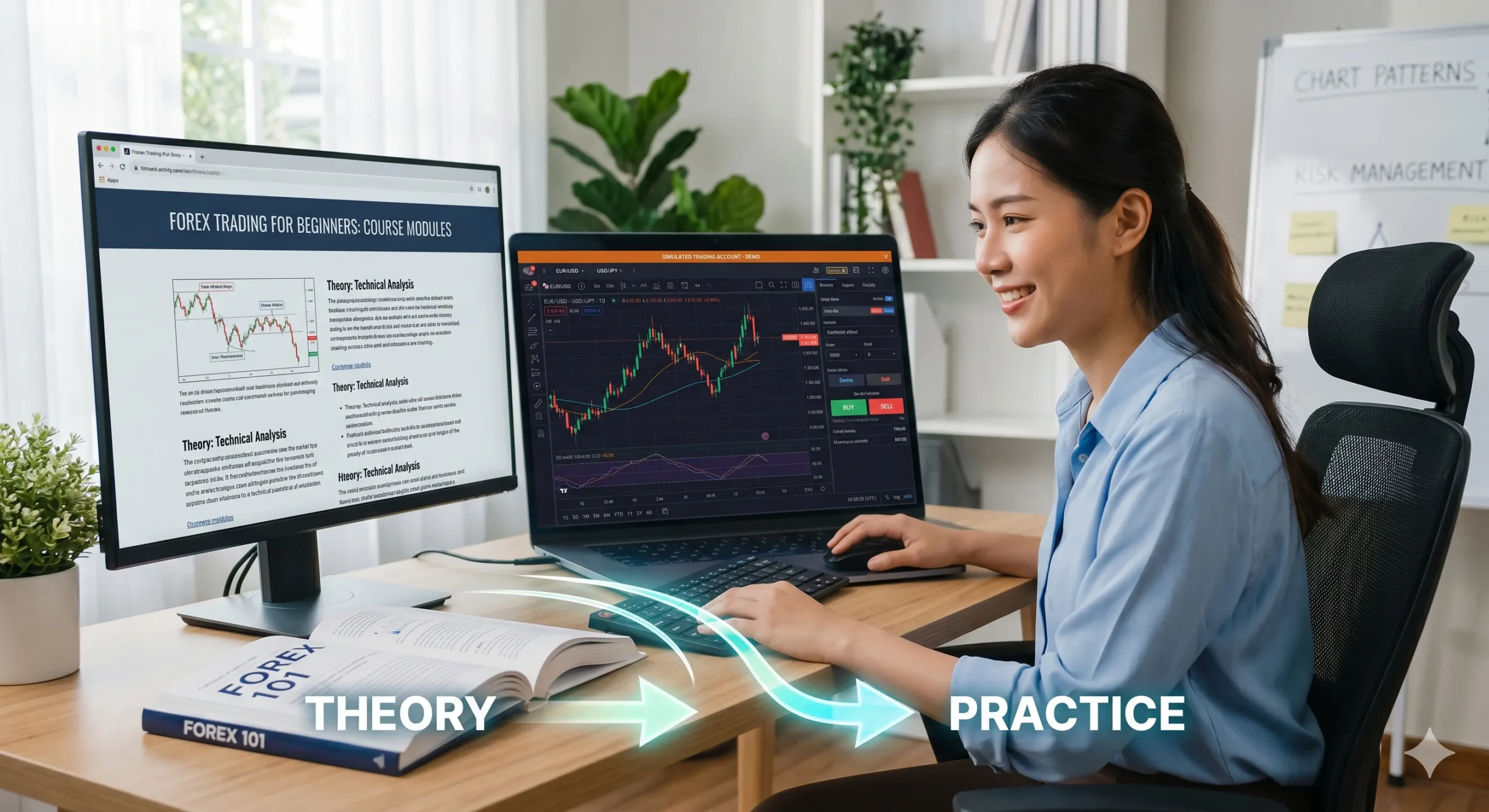
Ultimately, fully learning what is forex trading is an ongoing journey that requires deep commitment, continuous study, and strict emotional discipline. You now understand the basic overall market structure, the distinct mechanics of currency pairs, and the undeniable importance of strategic risk management. If you are entirely focused on forex trading for beginners, your absolute next step is to smoothly transition from theoretical knowledge to practical chart analysis using simulated broker trading accounts. By thoroughly exploring the additional resources linked throughout this comprehensive guide, you will steadily build the confidence strictly needed to tackle the live markets.
Is currency trading safe for absolute beginners?
It inevitably carries significant inherent risk, especially if you actively enter without proper education or a highly solid trading plan. However, you can significantly mitigate these dangerous factors by starting with a risk-free demo account and practicing proper portfolio management before risking real money.
Do I need a lot of money to start trading?
No, many modern retail brokers allow you to quickly open a starter account with as little as a few dollars. Despite this wonderful accessibility, it is highly recommended to start with a deeply reasonable amount that allows for proper risk distribution on your initial market entries.
Can I really trade 24 hours a day?
Yes, the decentralized electronic financial network operates continuously during the standard workweek without closing. Keep in mind that active volatility constantly varies, so you must carefully monitor your local schedules to find the most favorable and active trading conditions.